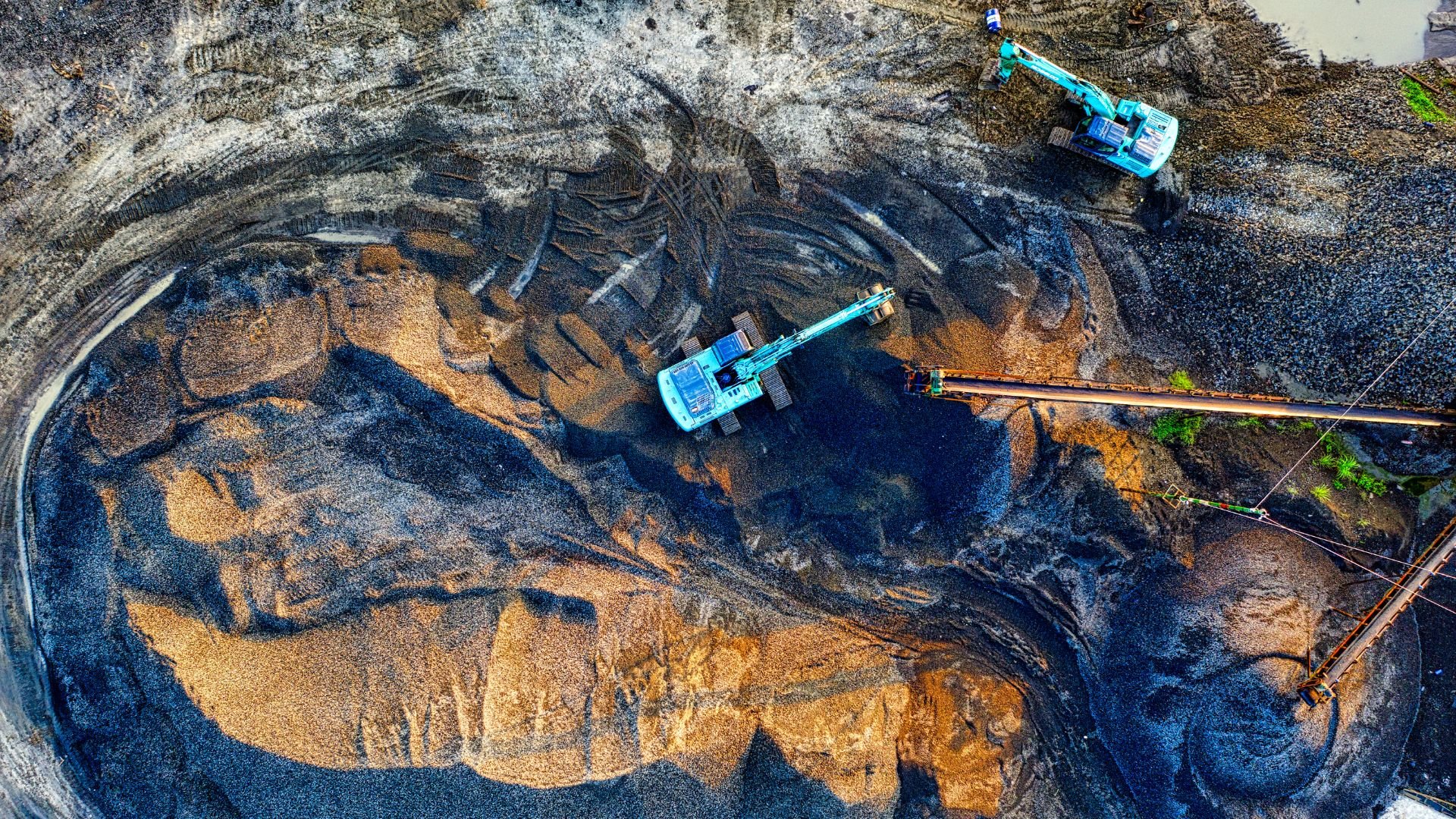
Drainage & Erosion Control in Saluda County, SC
Standing water, soggy yards, washed-out slopes, and water running toward the house. We fix the cause, not the puddle.
Get the water moving again
Nearly every drainage problem is a grading problem wearing a disguise. Before we install anything, we work out where the water comes from, where it is trying to go, and what is stopping it. Then we build the shortest reliable path from one to the other.
French drains and subsurface systems that keep working
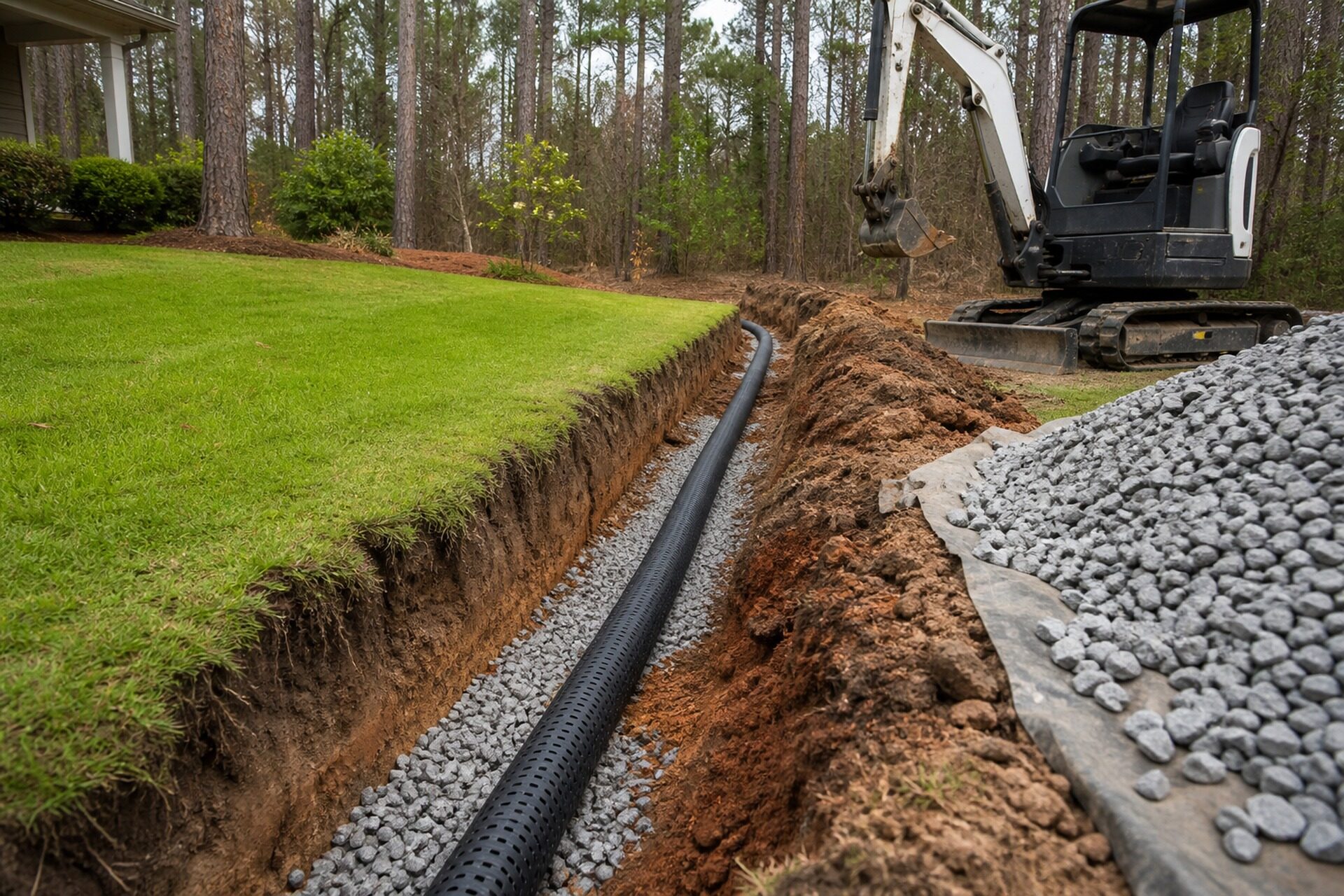
A french drain is simple and easy to do wrong. Ours are trenched to a consistent fall, bedded in washed stone, wrapped in filter fabric so the surrounding soil cannot silt the stone up, and daylighted to a real outlet instead of a hopeful low spot. We tie in downspouts, footing drains, and catch basins where it makes sense, and we make sure every part of the system has somewhere to discharge.
Standing water and soggy lawns corrected
Low spots that never dry, water sitting against a foundation, and yards you cannot mow for a week after rain.
Ditches cut, cleaned, and shaped to flow
Silted-in and flattened ditches re-cut to grade so they carry water instead of holding it.
Slopes stabilized before they wash again
Riprap, check dams, regrading, and matting on banks and cuts that keep losing material every storm.
Culverts sized and set correctly
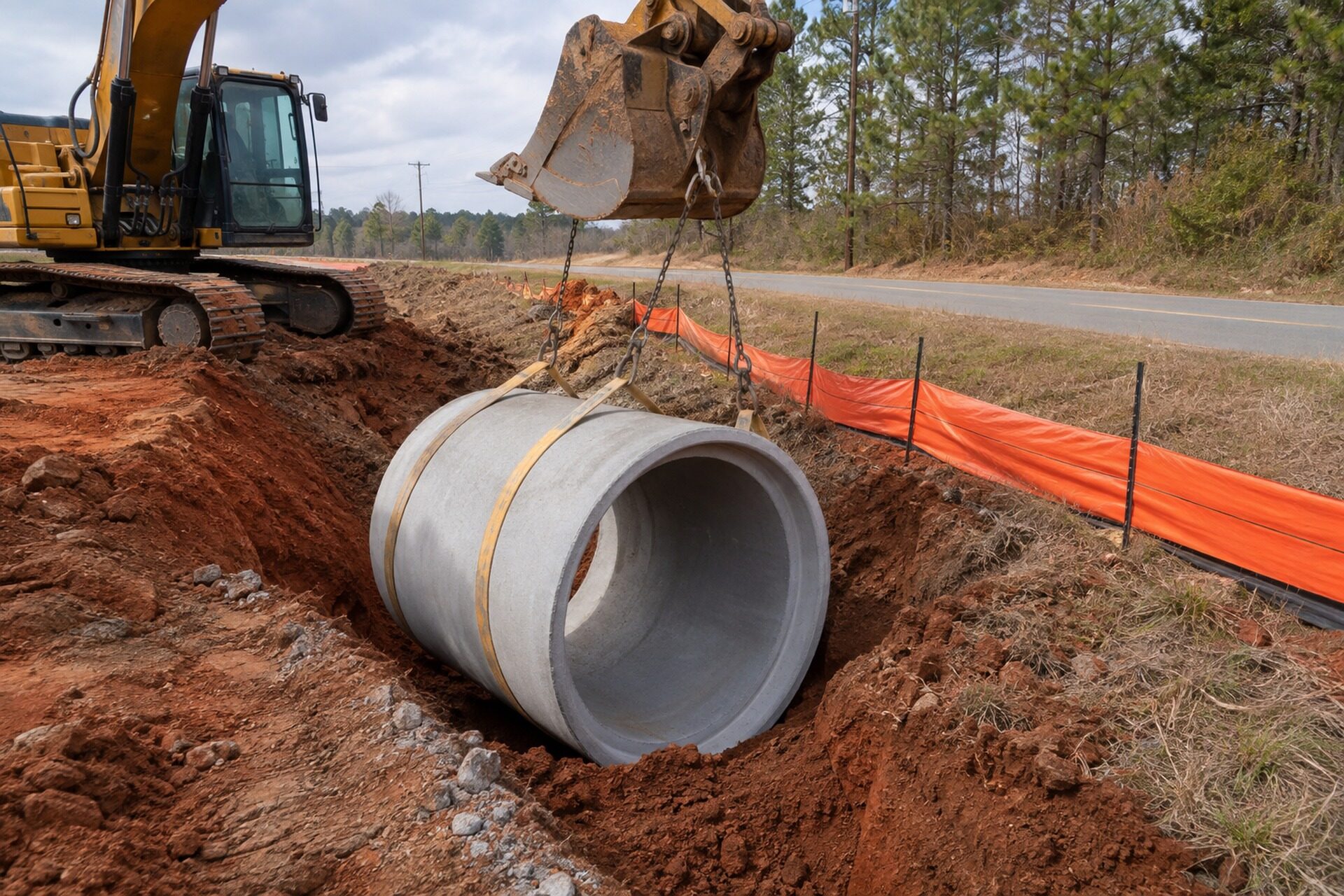
Pipe and crossings installed at the right elevation with proper bedding, backfill, and inlet and outlet protection.
Diagnose first, dig second
Installing a drain in the wrong place is expensive and does nothing. We spend time on the front end working out the actual hydrology of your property before we recommend a solution.
-
Walk the site and identify the contributing area — where the water is coming from
-
Find the low points, the blocked paths, and any grade that runs the wrong way
-
Confirm there is a viable outlet, because a drain with nowhere to discharge is just a buried trench
-
Fix surface grading and swales first, since surface water is cheaper to move than subsurface
-
Add subsurface systems only where surface correction genuinely cannot do the job
-
Stabilize the disturbed ground so the fix does not become the next erosion problem
Why water sits in Saluda County yards
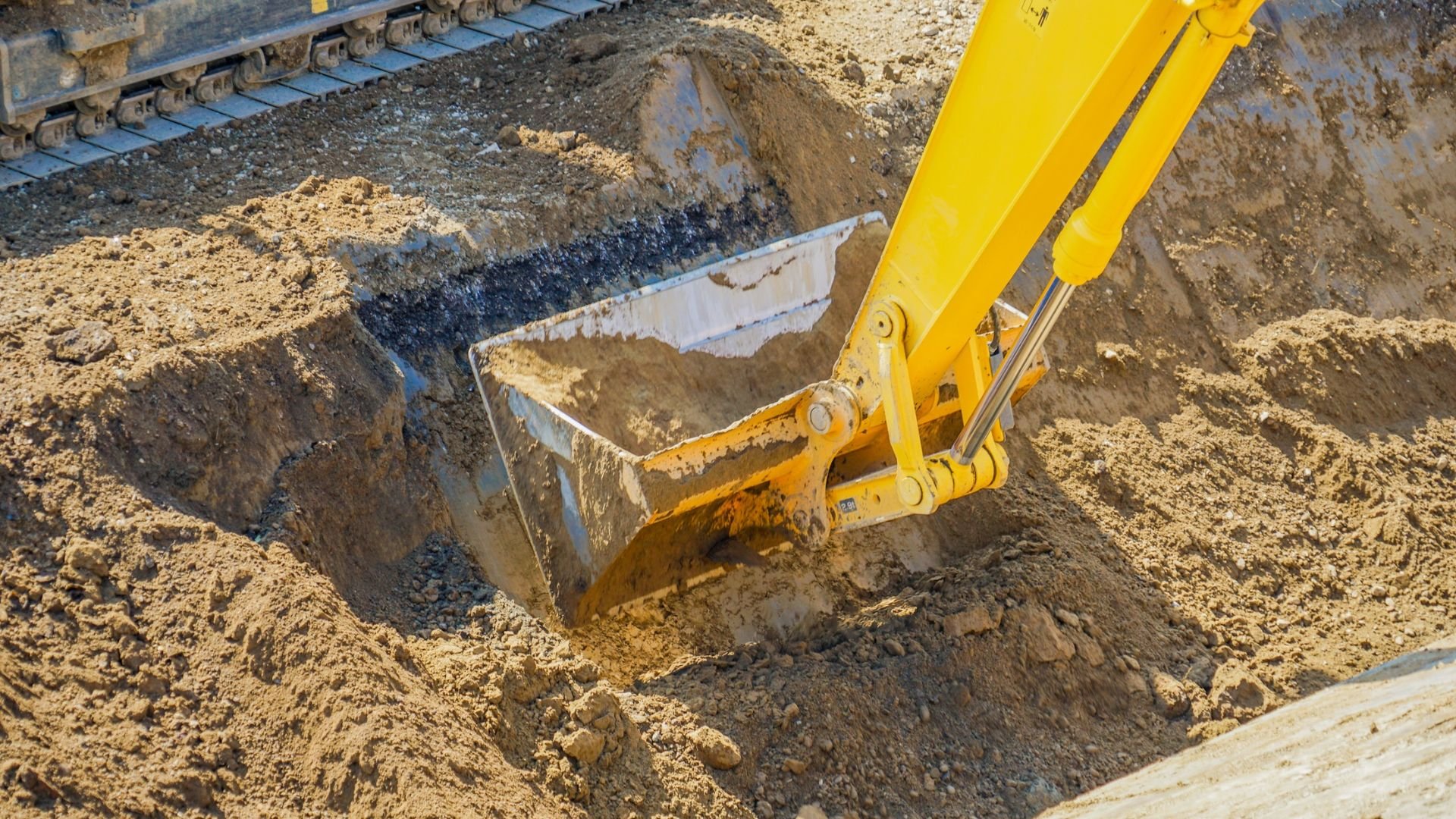
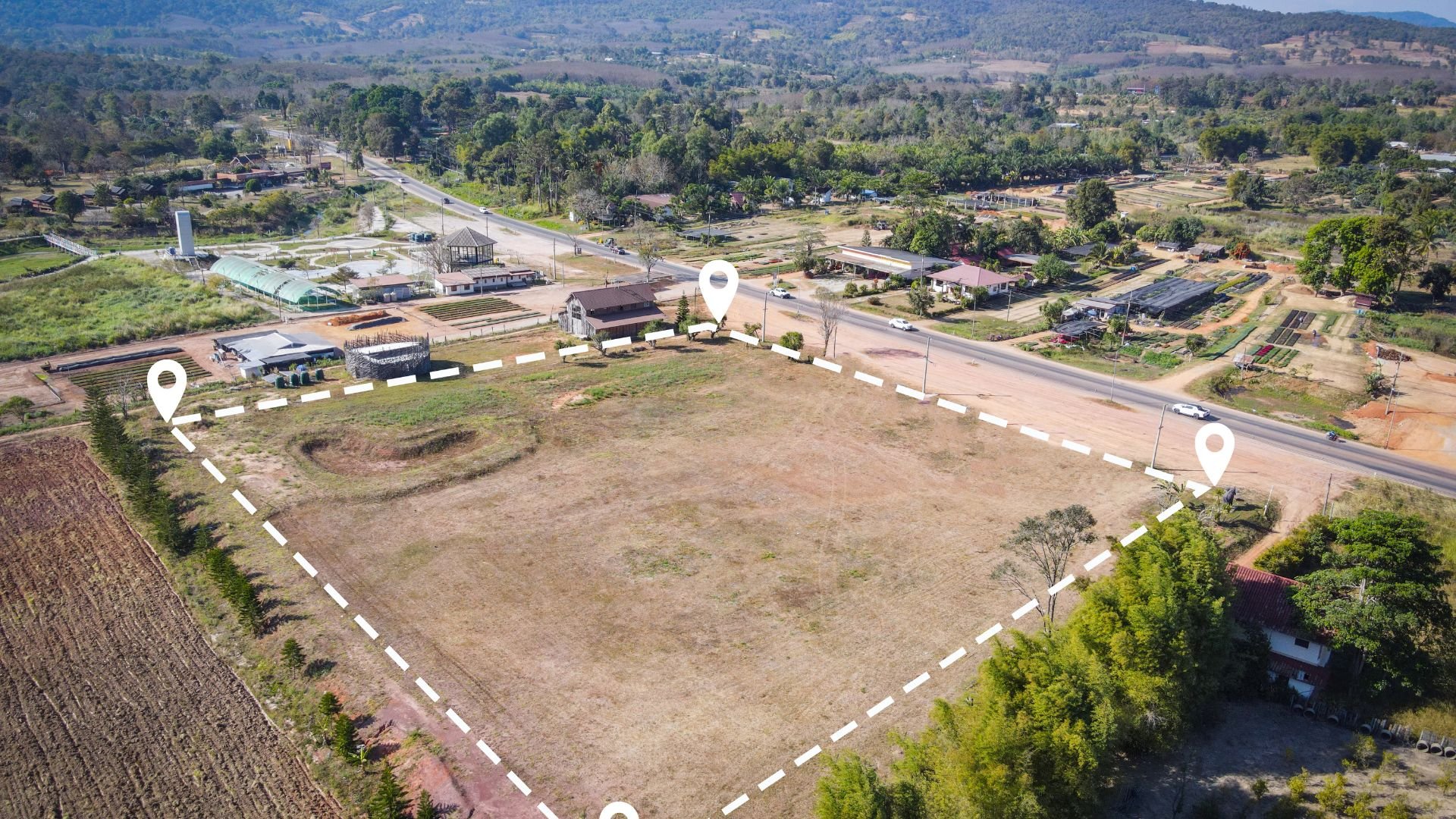
The heavy red clay across this region drains slowly and compacts hard, especially where construction equipment has run over it. Water that would soak away in sandy soil sits on the surface here for days. Add the rolling terrain and heavy summer downpours and you get the two problems we get called about most: low areas that never dry out, and slopes that lose soil every time it storms. Both are fixable, but the fix has to account for how this ground actually behaves.
We find the cause, not the puddle
Treating the symptom means doing the work twice. We trace the water back to where it starts before we recommend anything.
Every system gets a real outlet
Drains are daylighted or tied into a functioning discharge point. No pipe that runs into nowhere and backs up in a year.
Erosion control that holds
Silt fence, matting, riprap, and check dams sized and placed for the flow they actually have to handle.
Everything else we handle in Saluda County
Drainage rarely stands alone. These are the services it most often connects to on a real job.
-
Driveways & gravel roads — Roadside ditching, culverts, and crowned surfaces that shed water properly.
-
Grading & land clearing — Reshaping ground and clearing the routes water needs to follow.
-
Excavation services — Trenching, ponds, and the earthwork behind larger drainage systems.
-
Concrete services — Slabs, pads, and flatwork poured with the right slope built in.
-
Demolition services — Removing the structures and old slabs that are blocking the water.
Questions
Answers about french drains, standing water, ditching, and erosion control.
Usually a combination of heavy clay soil that drains slowly, compacted ground from past construction traffic, and a low area with no path out. The fix is to give the water somewhere to go, either by regrading the surface or by installing a subsurface drain with a real outlet. We assess which one your site actually needs.
It depends on length, trench depth, how difficult the soil and access are, and how far away the outlet is. The outlet distance surprises people most often, since a drain with nowhere to discharge does not work at all. We give free on-site estimates with the scope written out. Call (864) 993-7573.
Often just better grading, and we will tell you that. Surface water is much cheaper to move than subsurface water, and a corrected grade or a cut swale solves a large share of the drainage calls we get. We recommend a subsurface system only where surface correction genuinely cannot do the job.
The most common causes are no filter fabric, so silt clogged the stone; inconsistent fall, leaving flat sections where water stands; or no genuine outlet, so the system backs up. Backfilling the trench with excavated clay instead of washed stone will also seal a drain off from the water it was supposed to collect.
Yes, and it usually starts outside. We regrade so the ground falls away from the structure, extend and tie in downspout discharge, and install footing drains or an intercepting drain uphill of the house where needed. Getting water away from the building before it arrives is far more effective than managing it once it is there.
Yes. Silted-in and flattened ditches get re-cut to a consistent grade, cleared of sediment and vegetation, and shaped so they carry the flow they were built for. This is routine work for us and it is often the cheapest drainage improvement a property can get.
Slow the water down, spread it out, and armor where it concentrates. Depending on the site that means diversions or swales above the slope to intercept flow, riprap or rock check dams in the channel, and matting with seeding on the graded face. We size the measures for the flow the slope actually gets.
Yes. We size pipe for the drainage area it serves, set it on compacted bedding at the correct slope, backfill in lifts, and protect the inlet and outlet against scour. Undersized or badly set culverts are one of the most common causes of driveway and road failure we get called about.
Most residential yard drainage and french drain installations are one to three days. Ditching, culvert work, and slope stabilization vary with length and access. We give you a realistic timeline along with the estimate.
Saluda County and the surrounding counties, including Newberry, Lexington, Edgefield, Greenwood, and Aiken, with jobs regularly taken from Charleston to Augusta. Call (864) 993-7573 if you are unsure whether we reach your property.
Still have questions?
Call (864) 993-7573 for more details
Ready to fix the water problem
Free on-site drainage assessments across Saluda County. Tell us what the water is doing and we will come look at it.